Ingredient profile
African Mango in Sugar Defender: Fruit on the Label, Seed in the Studies
African mango in Sugar Defender is an Irvingia gabonensis fruit extract, listed 4th of 22 in the 200 mg blend. Its place caps it at 50 mg per mL. The main trial used 150 mg twice a day, mostly of seed extract, and the weight evidence is weak. No trial has tested the drops.
Written by the Sugar Defender label deskUpdated
On the label01
What is African mango in Sugar Defender?
African mango in Sugar Defender is an extract of the fruit of Irvingia gabonensis, a tree sold for weight management. It is the 4th of 22 lines in the blend.
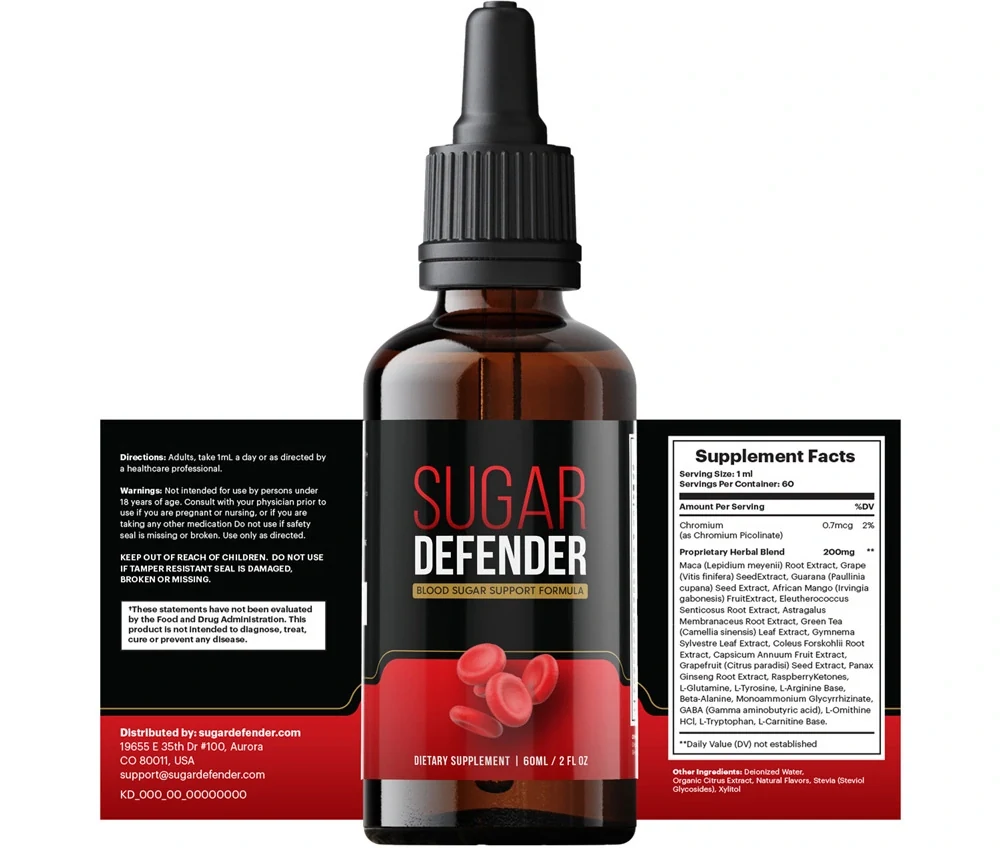
The label prints it as "African Mango (Irvingia gabonensis) Fruit Extract".
Only maca, grape seed and guarana sit above it, so it can be one of the larger shares.
| Name on the label | African Mango (Irvingia gabonensis) Fruit Extract |
|---|---|
| What it is | Irvingia gabonensis fruit (most studies used the seed) |
| Place on the label | 4 of 22 in the 200 mg proprietary blend |
| Amount per mL (1 dropper) | Not listed; #4 of 22 in the 200 mg blend, so at most 50 mg per mL |
| Amount used in research | 150 mg twice a day (300 mg) |
| Strength of evidence | Weak, small trials |
| Marketed or traditional use | Sold for weight management |
| Main caution | Gas, headache, sleep problems; caution with diabetes drugs. |
Fruit vs seed02
Does the African mango in Sugar Defender match the studied extract?
Not clearly: Sugar Defender's label says African mango fruit extract, while most studies of Irvingia gabonensis used an extract of the seed (MSKCC, Irvingia gabonensis (African mango)).
The fruit and the seed are different parts of the plant, so results from one may not carry over to the other.
The label also gives no extract strength.
| Detail | Sugar Defender label | Studies |
|---|---|---|
| Plant part | Fruit extract | Mostly seed extract |
| Amount | Not printed (at most 50 mg per mL) | 150 mg twice a day in one small trial |
| Strength | Not printed | Varied by study |
| Length of use | 60 days a bottle at 1 mL a day | 10 weeks in the 300 mg trial |
We flag the gap because it changes how much any study can tell you about the drops. The wording on the bottle is on the supplement facts page.
Dose math03
What is the most African mango 1 mL of Sugar Defender can hold?
African mango in Sugar Defender can be at most 50 mg per mL, since it is 4th in a 200 mg blend listed from most to least.
That ceiling is one sixth of the 300 mg a day used in the trial (NIH ODS, Dietary Supplements for Weight Loss).
An even split of the blend, about 9 mg, would be about 3% of it.
Start with the total
The blend weighs 200 mg per mL.
Use the order
African mango is 4th, so it cannot outweigh the three above it: 200 / 4 = 50 mg at most.
Compare the dose
The trial gave 150 mg before lunch and dinner. Matching 300 mg at the ceiling takes 6 mL a day.
At 6 mL a day, a 60 mL bottle would last 10 days. The label says 1 mL a day, and we do not suggest more.
What studies found04
What did African mango research find for weight and blood sugar?
The evidence behind African mango, as used in Sugar Defender, is weak: most weight studies were small and poorly designed (MSKCC, Irvingia gabonensis (African mango)).
Human data on blood sugar are limited.
The NIH weight-loss fact sheet also calls the evidence limited (NIH ODS, Dietary Supplements for Weight Loss).
Weight
Small trials of mostly seed extract. Memorial Sloan Kettering rates the evidence as weak.
WeakBlood sugar
Few human data. A possible added glucose effect was shown in rats, not people.
LimitedThe drops
No trial of Sugar Defender, and a different plant part on the label.
Not studiedSales copy05
What does the sales page claim about African mango?
The Sugar Defender sales page calls African mango a "Fat Burning Agent" (Sugar Defender sales page). The studies we found do not support that label.
The FTC expects a health claim to rest on trials of the same product and dose (FTC, Health Products Compliance Guidance).
No such trial exists for the drops.
Weight-loss supplements are a common place for hidden drugs. A JAMA review found 40.9% of tainted supplements flagged by the FDA were sold for weight loss (Tucker et al., JAMA Netw Open 2018). That says nothing bad about these drops. It is a reason to judge any fat-loss promise by its evidence. See every named claim on claims vs evidence.
Sugar Defender: from $49 a bottle60 mL · 1 mL a day · 2, 3 or 6 bottles · free US shipping on 3 or 6 · 60-day guarantee
See packsSafety06
Who should be careful with African mango?
People on diabetes medicines should ask a doctor before taking African mango, including the share in Sugar Defender. A glucose effect may add to those drugs (MSKCC, Irvingia gabonensis (African mango)).
Reported side effects include gas, headache and trouble sleeping.
One case of kidney failure needing dialysis was reported, so people with kidney disease should ask first.
Do not change a diabetes drug because of a supplement. Bring the bottle to your next visit so your doctor sees the whole blend.
Other blend lines carry their own notes. Read side effects and interactions for the full list.
Photos07
Do the Sugar Defender product photos show African mango?
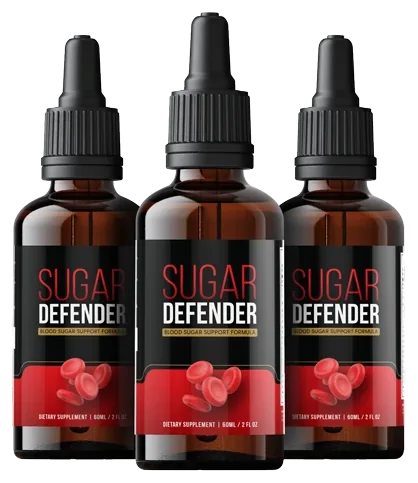
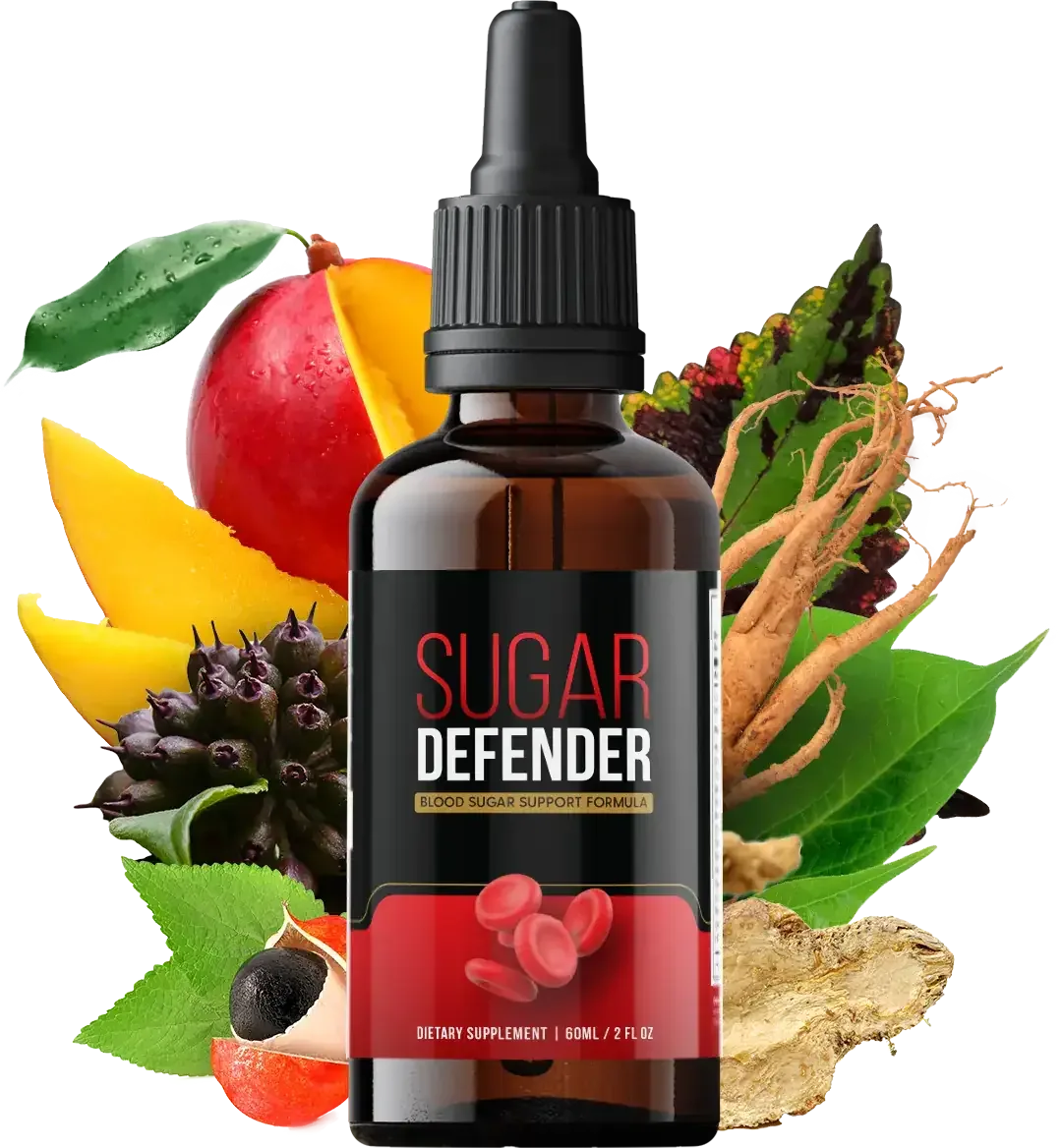
The Sugar Defender photos show fruit, but as props: the scene and the fruit-tree photo are brand art, not proof of what is in the African mango line.
The fruit-tree photo at the top matches the label's "fruit extract" wording.
Only the label tells you what is inside.
The scene shows a bottle among fruits, berries and roots. Some match blend lines, such as ginseng. Others are styling. Read the photo as a mood, and read the label for facts.
The full list of 23 lines is on the ingredients page.
Bottom line08
Is African mango a good reason to buy Sugar Defender?
No, African mango is a weak reason to buy Sugar Defender: the evidence is thin, the label names a different plant part, and the amount is capped below the trial dose.
Its high place in the blend is the best thing it has going for it.
In its favor
- 4th of 22, one of the larger possible shares
- Named clearly on the label
Against it
- Fruit on the label, seed in most studies
- At most 50 mg, under the 300 mg trial dose
- Weak, small trials
FAQ09
What do people ask about african mango?
People most often ask: What is African mango (Irvingia gabonensis)? The short answer, and 5 more, open below.
Each answer starts with the direct reply, then the reason, with a source where one exists.
What is African mango (Irvingia gabonensis)?
African mango is the common name for Irvingia gabonensis, a tree whose extracts are sold for weight management. Sugar Defender uses a fruit extract, 4th of 22 in its blend, while most studies tested the seed (MSKCC, Irvingia gabonensis (African mango)).
Does African mango help weight loss?
The evidence is weak. Most weight studies were small and of poor design, and they mostly used seed extract (MSKCC, Irvingia gabonensis (African mango)). One small 10-week trial gave 150 mg twice a day (NIH ODS, Dietary Supplements for Weight Loss). No trial has tested Sugar Defender for weight.
Is African mango fruit extract the same as seed extract?
No, they come from different parts of the plant, and results from seed studies may not apply to fruit. The Sugar Defender label names fruit extract and gives no strength, so we cannot match it to the research (MSKCC, Irvingia gabonensis (African mango)).
How much African mango does Sugar Defender contain?
The label does not print it. African mango is 4th of 22 in the 200 mg blend, so 1 mL holds at most 50 mg. An even split of the blend would give about 9 mg.
Does African mango have side effects?
Yes, reported side effects include gas, headache and trouble sleeping, and one case of kidney failure requiring dialysis was reported (MSKCC, Irvingia gabonensis (African mango)). It may also add to diabetes medicines. Ask your doctor first if you take them or have kidney disease.
Is African mango a fat burner?
No good evidence shows that it is. The sales page calls it a "Fat Burning Agent", but weight studies were small and weak, and none tested the drops (MSKCC, Irvingia gabonensis (African mango)). At most 50 mg per mL also sits under the 300 mg trial dose.
Who wrote this10
Who wrote and reviewed this Sugar Defender guide?
The Sugar Defender label desk wrote it from the label, the sales page and linked public sources.
A medical reviewer's name goes in the box below once a review is on file.
Pages built from the label, the sales page and linked NIH, FDA, CDC, FTC and peer-reviewed sources.
Last updated . See our editorial standards and how we check reviews. This website is run by a U.S. authorized Sugar Defender merchant, not by the manufacturer or the label distributor. We are paid when you buy through our order links.
Keep reading
What should you read next about Sugar Defender?
Read ingredients, claims vs evidence, the other blend herbs next: they pick up where this one stops.
Each one starts from the same label and links its sources.
U.S. authorized Sugar Defender merchant
Ready to try Sugar Defender?
Check your medicines first, then choose a pack. Three or six bottles ship free in the US and cost less per bottle, and the 60-day money-back window starts on the day you buy.
- Secure checkout on the sales page
- 60-day money-back guarantee
- Ships from the U.S.; free on 3 or 6